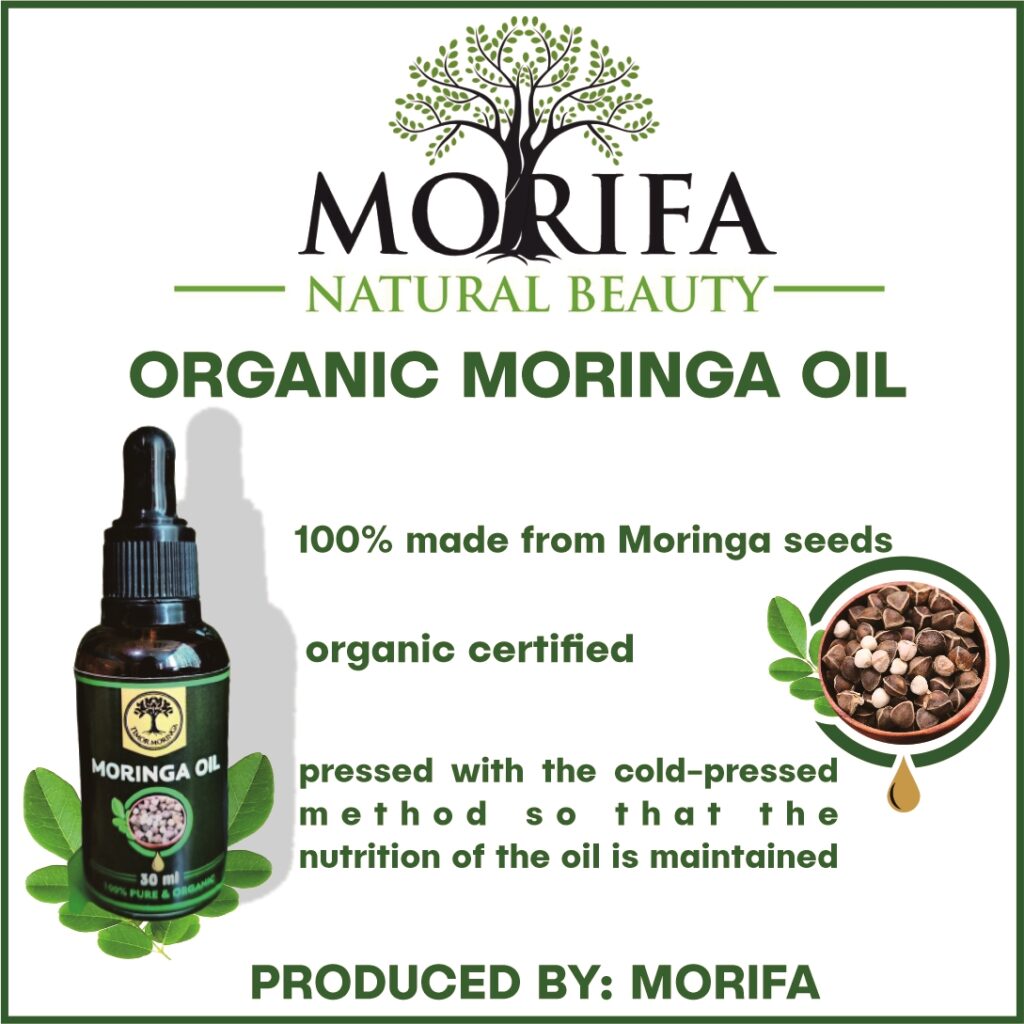
Long before modern skincare, Moringa oleifera seed oil — historically “ben oil” — was prized in ancient Egypt for protecting and softening skin. As the natural-cosmetics market grows fast, formulators are rediscovering it. This review in the open-access Research and Reviews: Journal of Pharmaceutics and Nanotechnology, by a researcher at Kebbi State University, Nigeria, gathers what the science says about moringa oil’s quality and uses in personal care.
What the review covers
It assesses moringa seed oil’s composition and stability, compares extraction methods (solvent versus gentler aqueous-enzymatic techniques), and surveys applications across cosmetic formulations — creams, lotions, soaps and hair care.
Key points
- Moringa seed oil is a clear, pleasant oil of quality comparable to olive oil, high in stable monounsaturated fats (oleic acid).
- It is unusually resistant to oxidation — slow to go rancid — valuable for shelf life.
- It has a long history in skin preparations, ointments, creams and hair products, with good spreadability and skin compatibility.
- The extraction method affects quality and yield — important for cosmetic-grade specs.
In short, the review frames moringa oil as a premium, stable, multi-purpose natural oil, well matched to the “clean beauty” formulations brands are racing to launch.
Caveat: a narrative review of prior research, not a single new experiment; performance depends on oil grade and extraction, and claims should be validated on the finished formulation.
Summary of: Warra, A.A. (2014). Research and Reviews: Journal of Pharmaceutics and Nanotechnology, 2(3). Open-access article summarised by MORIFA; full paper via the PDF link above.